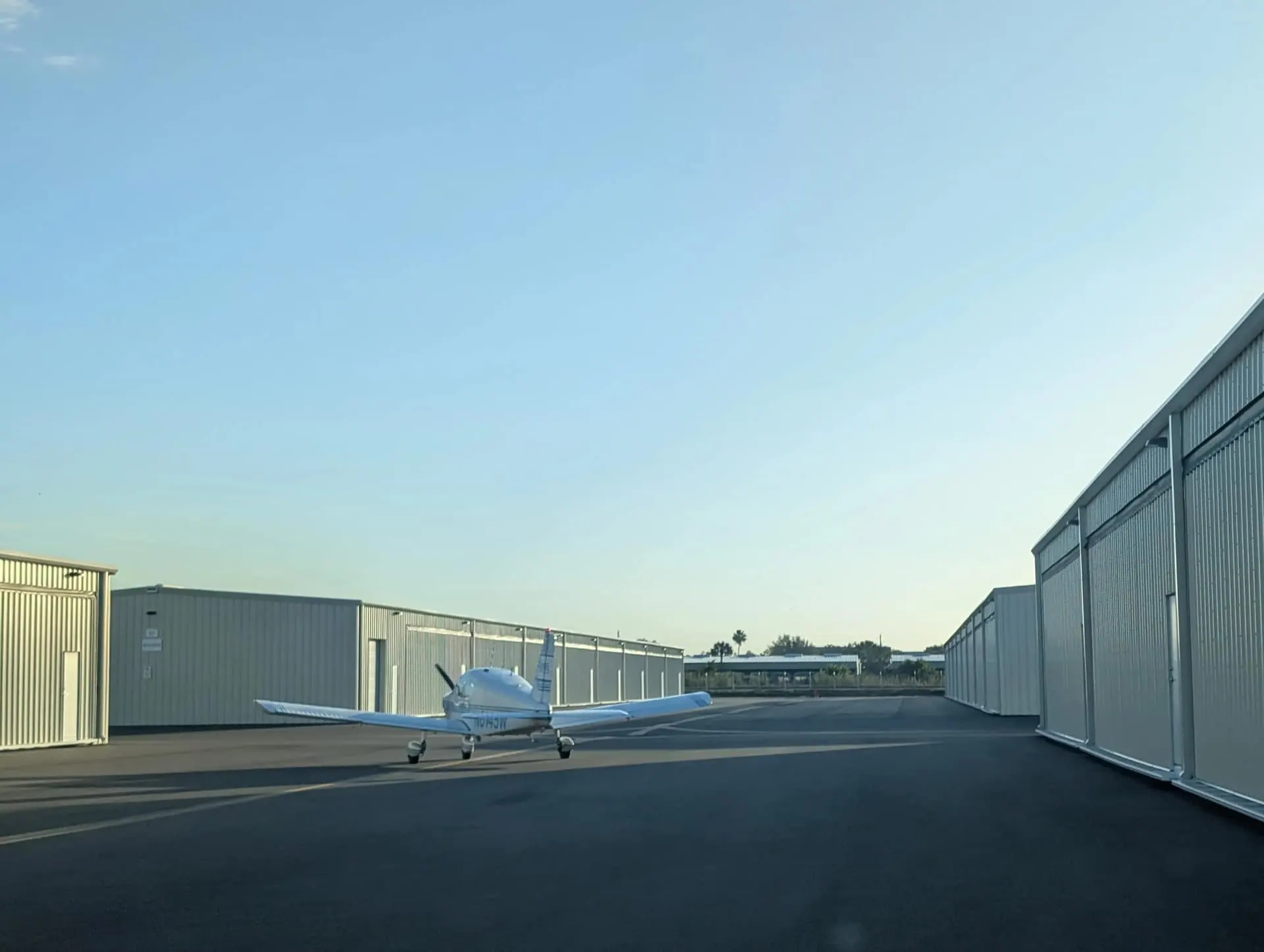
Towered, non-towered, and why no two airports run quite the same
A tower changes who you talk to, not how you fly. But even two towered fields run differently — the way we get out at Page Field is not the way we get out at Miami Executive, and knowing that difference is the difference between a smooth departure and a confused one.
By Cristian Duran
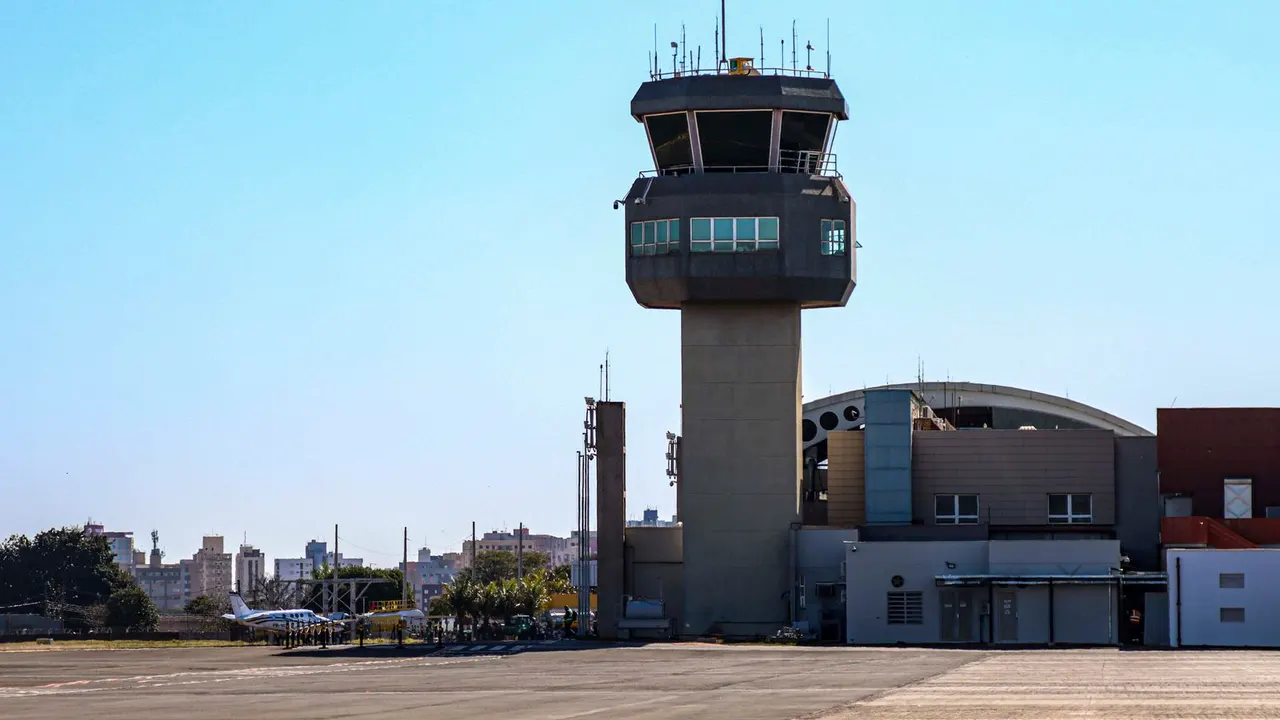
The short version: at a towered airport a controller sequences the traffic and gives you instructions you must comply with. At a non-towered airport nobody is in charge, so the pilots sequence themselves by announcing what they are doing on a common frequency and by following the standard pattern everyone has agreed to fly.
That is the difference in one paragraph. The flying is the same. The talking and the responsibility are not.
At a towered field
You get instructions. “Taxi to runway five via alpha.” “Line up and wait.” “Cleared for takeoff.” Those are not suggestions, and the ones that hold you or move you get read back.
What you gain is enormous, especially as a student: somebody is watching, there is a sequence, and traffic is being separated in the pattern by a professional whose entire job is that. What you owe in return is that you do what you are told, promptly, and that you say something immediately if you cannot.
At a non-towered field
You get information. The frequency is a CTAF, and everything said on it is an announcement, not a clearance. “Airport traffic, Cherokee four five whiskey, midfield left downwind runway one eight, touch and go, airport traffic.”
Nobody is separating you from anybody. You are. That means you fly the standard traffic pattern, you look, and you build the picture in your head from what you hear. It also means you must be ready for the airplane with no radio at all, which is entirely legal at most non-towered fields.
Most students find the non-towered field easier for about a week and then realize it is harder. A controller is a safety net. Without one, your eyes are the safety net.
Now the part nobody warns you about
Two towered airports are not the same as each other.
The regulations are identical everywhere. The local procedures are not, and they are shaped by the layout of the field, the volume of traffic, and how that particular tower likes to work. You find out by flying there.
Here is the example I use with my students, because both fields are ones we actually deal with in South Florida.
At Miami Executive (KTMB), when we are ready to go, we tell ground we are ready. Ground works our taxi and then hands us off — “contact tower” — and tower is the one who clears us for departure. The handoff happens because somebody on the ground told us to make it.
At Page Field (KFMY), we taxi down to the hold short line and then call tower ourselves: ready for departure, holding short five. We are the ones who initiate that call, at the line, when we are actually ready.
Same class of airport. Same certificate. Two different rhythms — and if you fly Page Field’s rhythm at Miami Executive, or the other way around, you will sit there waiting for a call that is never coming while somebody waits on you.
So how are you supposed to know?
Four things, in this order:
- Read the chart supplement for the field before you go. It is free, it lists frequencies, runway lengths, and remarks, and the remarks section is where local oddities live.
- Listen on the way in. Two minutes on the frequency tells you how that tower is working today better than any document.
- Watch what the airplane in front of you does. Aviation is an apprenticeship trade and always has been.
- Ask. “Cherokee four five whiskey is unfamiliar, request progressive taxi” is a completely normal call and nobody thinks anything of it. I have made it. I will make it again.
Why this matters more than it sounds
The reason I teach this early is that it inoculates you against the thing that actually goes wrong for new pilots: arriving somewhere unfamiliar and assuming it works like home.
If you learn that airports have personalities — that the procedure you know is a procedure, not the procedure — then unfamiliar fields become interesting instead of frightening. That is the mindset that gets you flying to Naples, to Punta Gorda, and eventually somewhere you have never been at all.
Every CORE lesson departs towered Page Field, so real ATC is part of your training from hour one. See what training here looks like.