Pilot schools: 12 questions that expose a bad one before you pay
The pilot school you pick decides how many hours you fly, how much you pay, and whether you finish. The questions that matter are who will teach you, whether the airplane is available, what the price really includes, and what happens if you stop. Here are twelve to ask on any visit, with what a good answer sounds like.
By Cristian Duran
Choosing between pilot schools is harder than it should be, because every school’s website says the same things: experienced instructors, a modern fleet, a high pass rate, flexible scheduling. None of that tells you what it will be like in month three, when you are working on landings and life is busy.
The students who finish on time and on budget almost always chose their school by asking better questions. Here are twelve. Ask them at every school you visit, including ours.
The kinds of pilot school
First, know what you are comparing. Pilot schools in Southwest Florida and across the country tend to fall into three groups.
- Large academies. Big fleets, many instructors, often Part 141, often a fixed-price career program with financing. They suit students who want a full-time structured track, need a student visa, or are using benefits that require Part 141.
- University programs. Flight training inside a degree. They suit students who want the degree anyway. See aviation school or flight school?
- Small local schools and independent instructors. Usually Part 61, usually pay as you go. They suit working adults, career-changers and anyone who wants one instructor and a flexible schedule.
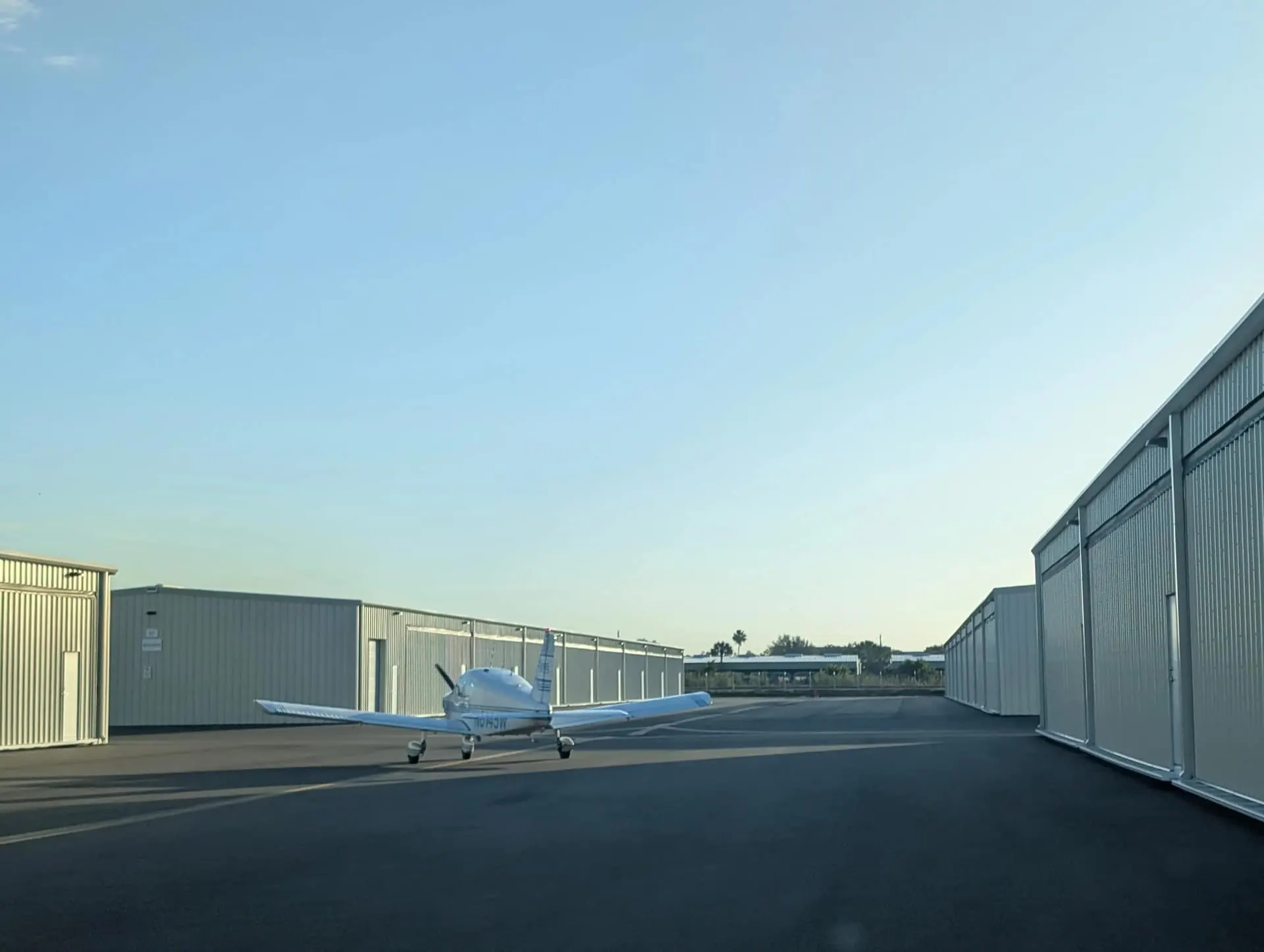
Core Aviator Training is the third kind: a Part 61 school at Page Field (KFMY) in Fort Myers, with one instructor, one airplane and one student at a time. That is a deliberate choice, and it is not right for everyone. The questions below will tell you which kind is right for you.
1. Who will be my instructor, and will it be the same person throughout?
This is the most important question on the list. Instructor turnover is one of the most common reasons students stall: every new instructor spends hours learning your flying, and you spend hours adjusting to a new teaching style. At busy schools, instructors often leave once they have built enough hours for an airline job.
A good answer: a name, and a plan for continuity. A warning sign: “whoever is available.”
2. How far ahead do I have to book the airplane?
A long fleet list means nothing if every slot is gone. Ask how far in advance students typically book, and what happens when an airplane goes down for maintenance.
A good answer: a specific number of days and a clear process. A warning sign: students regularly flying less than once a week because they cannot get a slot.
3. Is the airplane rate wet or dry?
“Wet” includes fuel. “Dry” does not, and fuel is a large part of the hourly cost. A dry rate always looks cheaper on the website.
Ours: $190 per hour wet for the Cherokee 140, fuel and maintenance included.
4. What is the instruction rate, and is ground instruction charged the same?
Some schools bundle instruction; some charge differently for ground and air. Either is fine — what matters is that you know.
Ours: $60 per hour, in the air or on the ground.
5. How many hours is your price quote built on?
If a school quotes a private pilot price built on 40 hours, it is quoting the FAA minimum, not a forecast. Most students need more. Ask what their students actually average.
Ours: students who study their ground material usually reach checkride standard around 65 hours. The full math is in pilot training cost in Fort Myers.
6. What do I have to pay up front, and what happens if I stop?
Prepaid blocks and packages can come with discounts, but they also mean your money is in someone else’s account. Ask what happens if you move, lose your job, or simply need a break.
A good answer: nothing prepaid, or a clear written refund policy. Ours: nothing prepaid. You pay for the session you just flew.
7. What is not included?
Every school has costs outside the hourly rate: the FAA medical, the knowledge test, the examiner’s checkride fee, a headset, books. Some schools list them; some leave them for you to discover.
A good answer: a list, with rough numbers. We wrote ours up in pilot license cost: the line items nobody lists.
8. Is the school Part 61 or Part 141, and why does that matter for me?
Neither is better in every case. Part 141 follows an FAA-approved syllabus and can allow slightly lower minimum hours; it is often required for student visas and some benefits. Part 61 lets the instructor tailor every lesson to you. Both lead to the same certificate and the same checkride.
A good answer: one that explains which suits your situation, not which is “better”.
9. Is there a brief and debrief with every lesson?
If lessons begin at the airplane and end at the airplane, a lot of learning is being left on the ramp. The brief tells you what to look for; the debrief locks in what happened.
Ours: every lesson is a three-hour block with a real brief and debrief. Here is what one looks like.
10. Can I see the airplane and its maintenance logs?
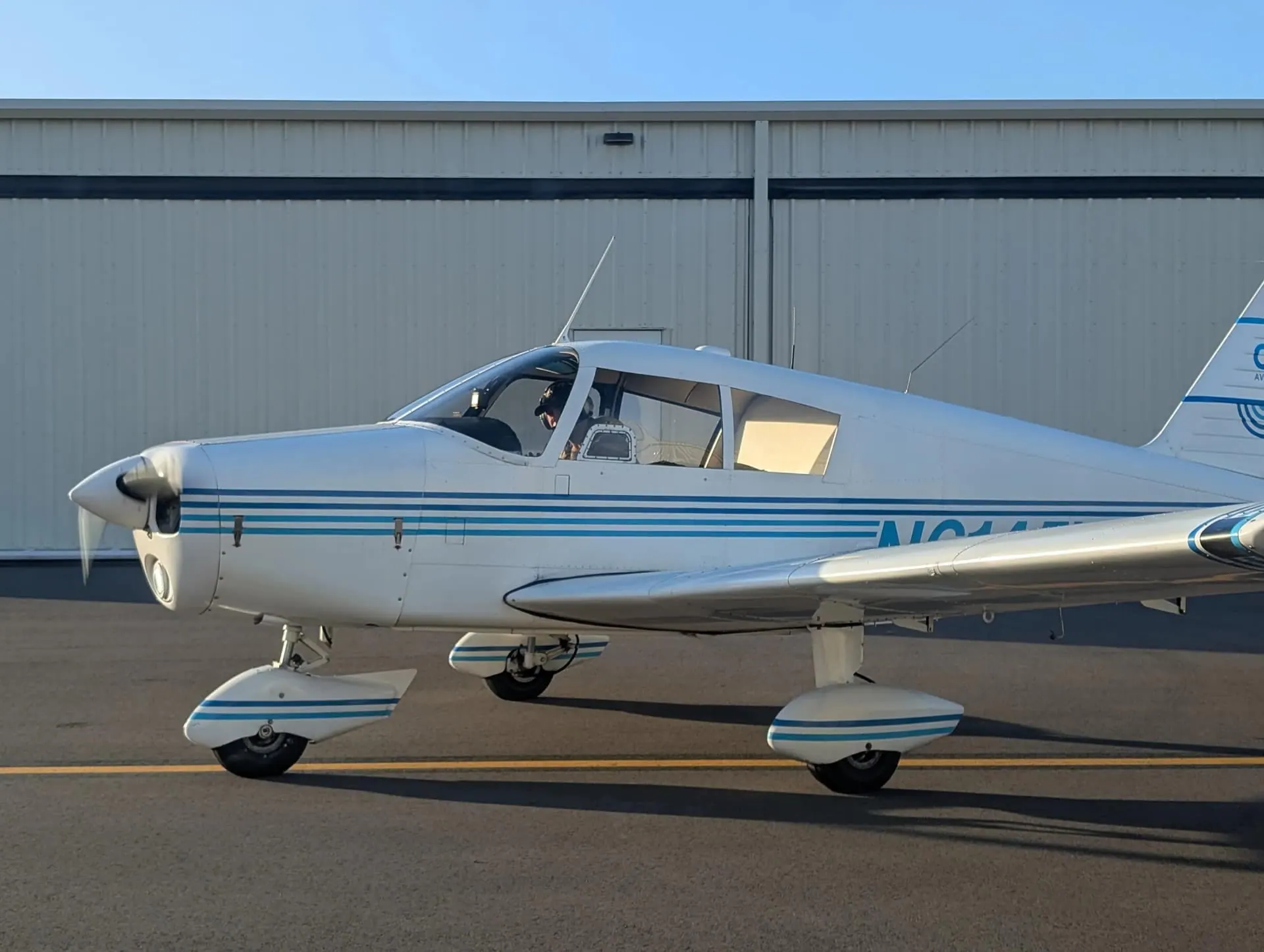
You can tell a great deal about a school from the condition of its fleet. Look at the interior, the paint, the cowling, the tires. Ask how often the aircraft are inspected and whether you can see the logbooks.
A good answer: “Of course.” A school proud of its maintenance will want you to look. Our Cherokee 140, N6145W, is on the fleet page.
11. Is the airport towered, and what is the training area like?
Training at a towered airport means you talk to air traffic control from lesson one. Training at a non-towered field is simpler at first, but radio work then has to be added later. Ask where the practice area is and how long it takes to get there.
Ours: Page Field is towered, and the practice area along the Gulf coast and the Caloosahatchee is minutes away. See towered vs non-towered airports.
12. Can I talk to a current student?
Reviews help. A conversation helps more. Ask a current student how often they fly, whether they have changed instructors, and whether the final bill matched what they were told.
We are rated 5.0 across 11 Google reviews, and you can read what students say on our reviews page.
A quick comparison sheet
Take this to every school you visit and fill it in:
| Question | School A | School B | School C |
|---|---|---|---|
| Instructor’s name, and will it stay the same? | |||
| Days ahead to book the airplane | |||
| Airplane rate — wet or dry? | |||
| Instruction rate (air / ground) | |||
| Hours their quote is built on | |||
| Anything prepaid? Refund policy? | |||
| What is not included? | |||
| Part 61 or 141? | |||
| Brief and debrief every lesson? | |||
| Did they let you see the logs? | |||
| Towered airport? Time to practice area? | |||
| Did you talk to a current student? |
Then run the cost arithmetic for each one using the same number of hours. The school that wins is usually the one where you can fly most consistently with the same instructor.
The warning signs
Walk away, or at least slow down, if you hear:
- A price with no hours attached to it.
- Pressure to sign or prepay before you have flown.
- No clear answer about who your instructor will be.
- Vagueness about what happens to your money if you stop.
- “Everyone finishes in 40 hours.”
How to visit a pilot school
Book a first lesson rather than a tour. Ten minutes in the building tells you less than an hour in the airplane with the person who would teach you. Watch how they brief you, whether they let you fly, and how they debrief you afterward. That one hour answers half the questions above.
Questions people ask about pilot schools
Is a bigger pilot school better? Not necessarily. A large fleet and many instructors help scheduling at some schools and hurt continuity at others. What matters is whether you can fly consistently with the same instructor.
Is Part 141 better than Part 61? Neither is better in every case. Both lead to the same FAA certificate and checkride.
How do I know if a pilot school is safe? Look at the airplanes, ask to see the maintenance logs, and watch how seriously they treat the brief and the go/no-go decision. A school that cancels for weather without charging you is a school that takes safety seriously.
Should I choose the cheapest pilot school? Choose the one with the lowest total, worked out on the same hours and including fuel and extras. That is often not the one with the lowest advertised rate.
Visit us at Page Field
A Discovery Flight at Core Aviator Training is $175. It is a real lesson with the instructor you would train with, in the airplane you would train in, and it counts toward your private certificate. Students come from Cape Coral, Naples, Estero and across Southwest Florida.
Call 239-722-6751, ask about the next opening, and ask me any of the twelve questions above.