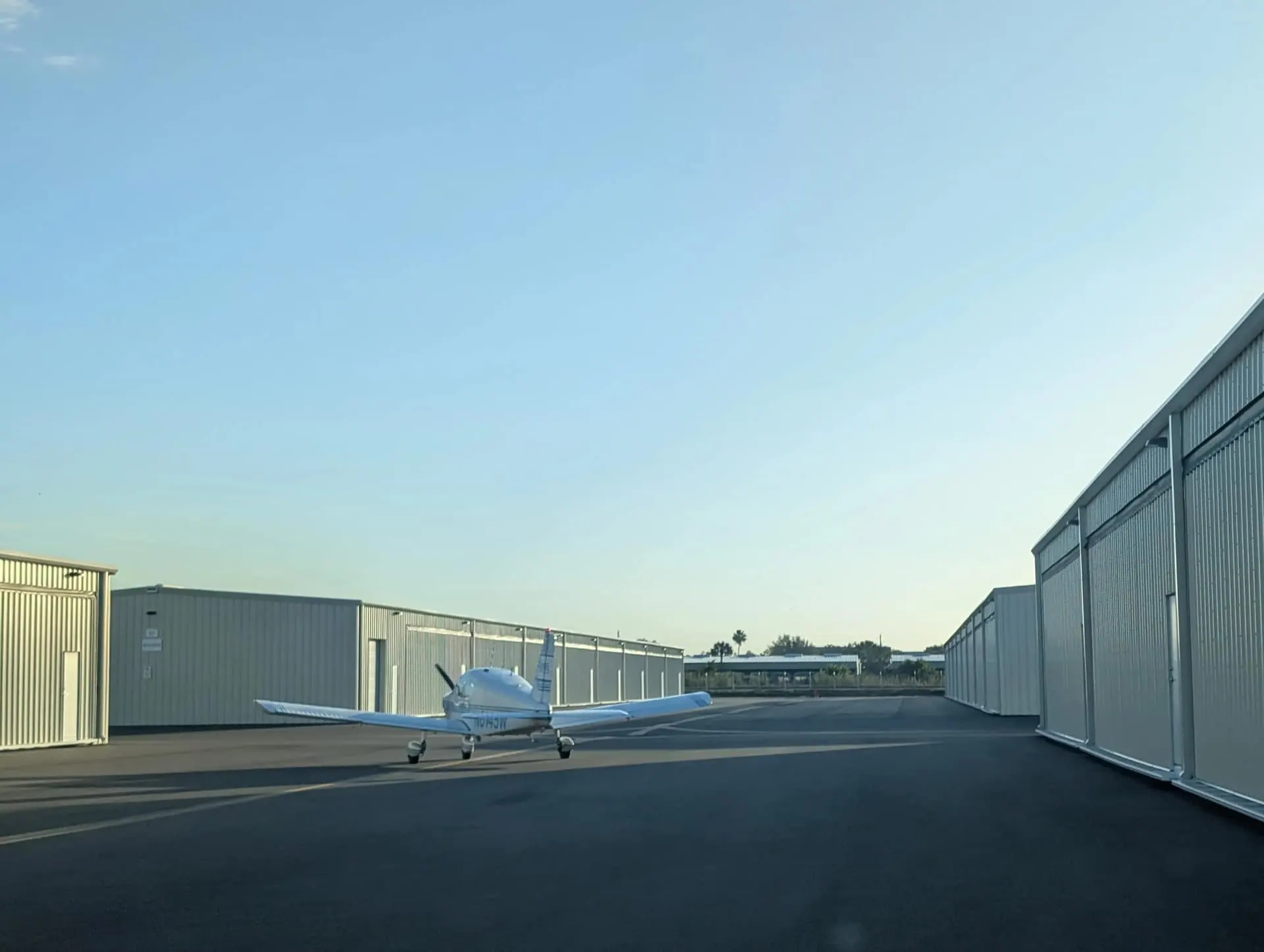
Moving the airplane on the ground is a skill, not a formality
Taxiing is where new students are most surprised: you steer with your feet, you brake with your toes, the wind still has hold of the wings, and the yellow lines mean specific things. Here is the whole job.
By Cristian Duran
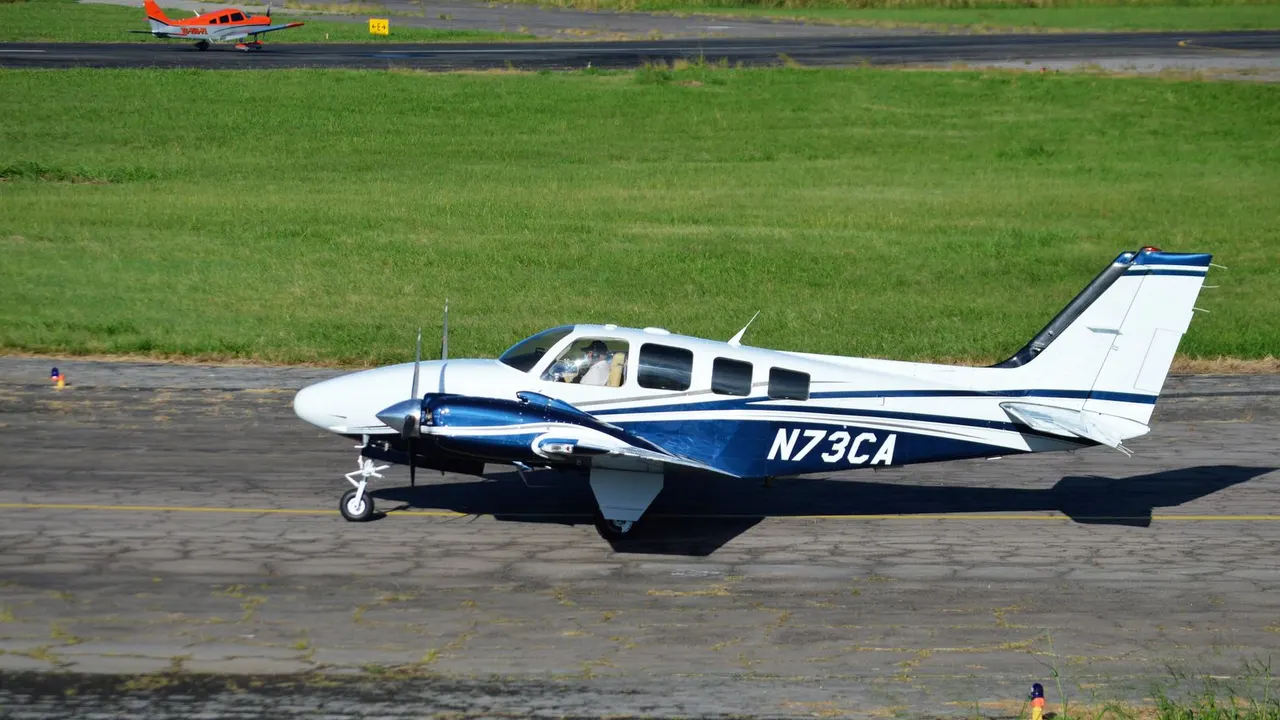
More students are surprised by the taxi than by the takeoff.
You have driven a car your whole adult life, so you get in, you put your hands on the yoke, you add a little power — and the airplane goes where it feels like going, because the yoke does absolutely nothing for you on the ground.
You steer with your feet
The nosewheel is connected to the rudder pedals. Left foot forward, you go left. Right foot forward, you go right. Your hands are for power and for the wind, and that is all.
Braking is the top of the same pedals. Press the top of the left pedal and you get the left brake — which is also how you make a tight turn if you ever need one. New students almost universally ride the brakes for the first ten minutes without knowing they are doing it. Get your heels on the floor and pivot from there, so a foot resting on a pedal is not quietly dragging a wheel.
Speed is “a brisk walk”
That is the whole standard. If somebody could walk fast beside the wingtip and keep up, you are about right. Faster than that on a taxiway and you are one distraction away from needing brakes you should not have needed.
And use the power to control speed, not the brakes. Set a power setting that gives you a walk, and leave it there. Riding the brakes against too much power is how you cook a brake and how you burn fuel going nowhere.
The wind still has your wings
This is the bit that separates people who were taught properly from people who were not. Your wings are still wings while you are on the ground, and a crosswind is still trying to lift one of them.
The rule most instructors teach is: climb into the wind, dive away from it.
- Wind ahead of you (a quartering headwind): turn the yoke into the wind, as if you were climbing a hill toward it. That pushes the upwind aileron up and holds that wing down.
- Wind behind you (a quartering tailwind): yoke away from the wind and hold the elevator down. You are diving away from it, keeping the tail from being lifted.
On a calm Fort Myers morning it feels like a ritual. On a gusty afternoon in February you feel exactly why it exists.
The paint and the signs mean things
Airport markings are a language, and it is worth ten minutes learning to read it rather than a year guessing.
- Yellow centerline — the taxiway. Keep the nosewheel on it and your wings are clear of everything the airport designer intended you to be clear of.
- A red sign with white letters — mandatory. This is the one that says “runway 5-23” and it means: do not go past this without a clearance.
- The hold short line (two solid yellow lines, then two dashed) — you stop with the whole airplane behind the solid side. Solid side = still on the taxiway.
- Black sign, yellow letters — where you are right now. Yellow sign, black letters with an arrow — where that direction leads.
Location black, direction yellow, mandatory red. Three colors, and you can read almost any airport in the country.
The one that actually matters
Everything above is craft. This is safety: never cross a hold short line without a clearance, and read that clearance back.
Runway incursions are one of the few things in general aviation that can go from “minor error” to “worst day of several people’s lives” with no intervening steps. That is why the read-back is required rather than encouraged, and it is why on our lessons I will stop the airplane and make you say it again if it came out wrong.
Where this shows up in your training
At Page Field you will taxi on your first lesson, with me on the pedals with you, and by your third or fourth you will be doing it yourself with me sitting on my hands. It is not a chore before the flying. It is the first ten minutes of being pilot in command, and it is where most of the habits that make an examiner comfortable are actually formed.
Your first taxi happens on your Discovery Flight — you do the walk-around and you have your feet on the pedals from the start.