
Flight schools in Florida: why the best one is the one you can reach twice a week
Florida has more flight schools than almost any other state because the weather lets you fly most of the year. The best one for you is usually the one close enough to fly twice a week. Here is what Florida training is really like, what changes between regions, and why students across Lee and Collier counties train at Page Field.
By Core Aviator Training
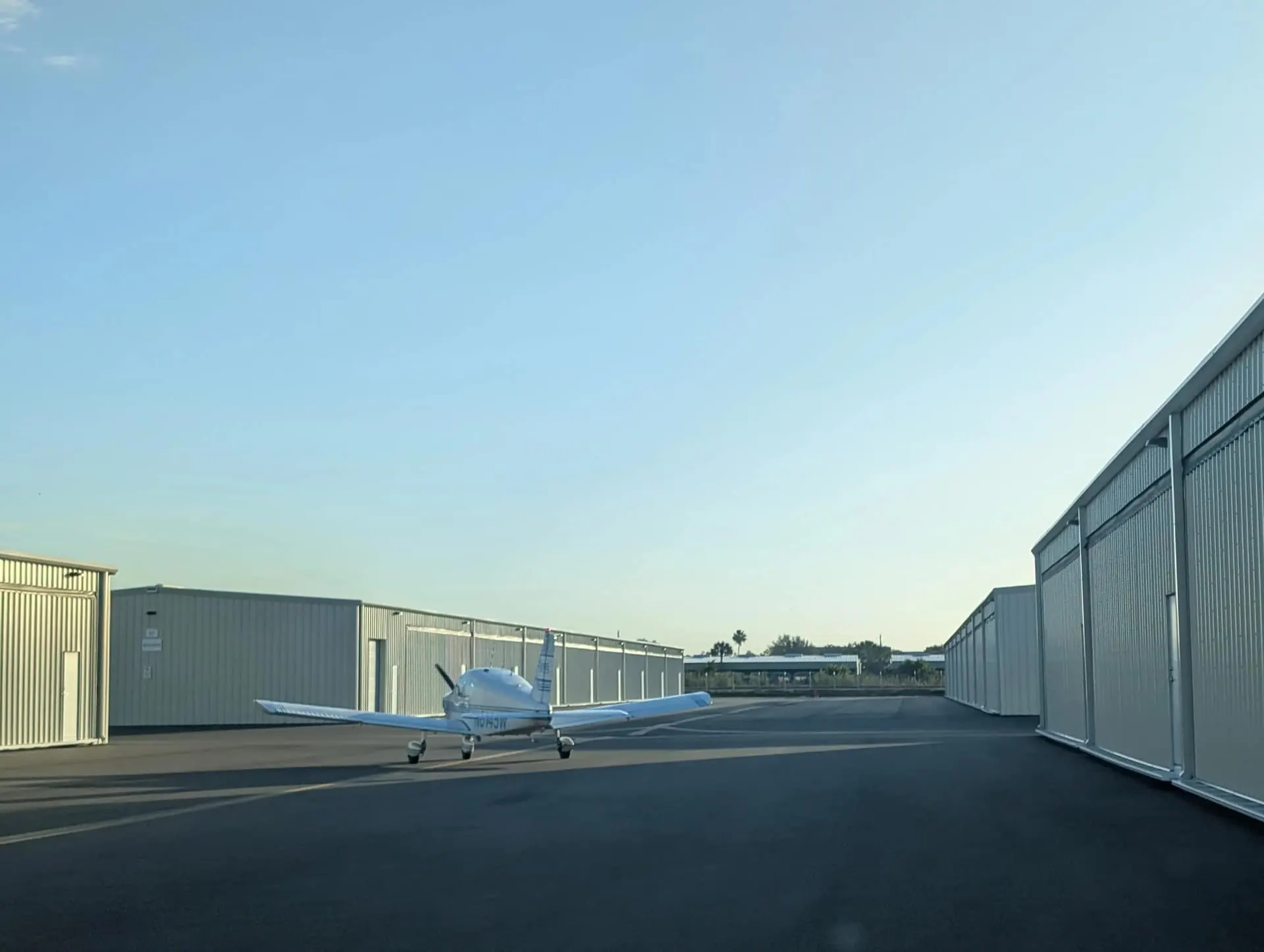
Florida is one of the busiest flight-training states in the country, and for a simple reason: you can fly here almost all year. Students come from across the US and abroad to train here, and the state has everything from large airline academies to one-instructor schools at small airfields.
That much choice can make it harder to decide, not easier. This guide covers what Florida flight training is actually like, what changes from region to region, and how to choose — written from Page Field in Fort Myers.
Why Florida is good for flight training
The weather. Southwest Florida gives you 300-plus flyable days a year. Winter, when much of the country is grounded, is our best flying season: cool, clear and smooth. A steady schedule is what finishes a certificate in fewer hours, and Florida weather makes a steady schedule realistic.
Flat terrain and clear landmarks. Coastlines, rivers, lakes and highways make navigation easy to learn. There are no mountains to complicate an engine-failure plan.
Lots of airports. The state is dense with airports, from busy towered fields to quiet grass strips, so cross-country training has endless destinations.
Busy, varied airspace. Learning around major airports, towers and military areas makes you a sharper pilot. From Page Field, Southwest Florida International (RSW) is just to the southeast, so airspace awareness is part of every lesson.
What Florida weather is really like
Florida is not perfect flying every day, and any school that tells you otherwise is selling something.
- Summer afternoons build thunderstorms. From late spring to early fall, the sea breeze pushes inland and storms often build by mid-afternoon. The fix is simple: fly in the morning.
- Hurricane season runs June through November. Most days are fine; a few are not, and the airplane gets secured.
- Heat and humidity reduce aircraft performance, which you learn to calculate. That is good training, not a drawback.
At Core Aviator Training, lessons are often scheduled early, and a weather cancellation is never charged. Learning when not to fly is part of what you are paying for. See risk management and decision-making.
How Florida’s regions differ
- South Florida (Miami, Fort Lauderdale): some of the busiest airspace in the country, many large schools, and heavy traffic on the drive to the airport.
- Central Florida (Orlando, Daytona, Lakeland): home to several large academies and university programs, with heavy student traffic.
- Southwest Florida (Fort Myers, Naples, Punta Gorda): quieter than the east coast, but with a towered training field, a major airport nearby, and some of the best scenery in the state — the Gulf, the barrier islands and the mangrove backcountry.
The best region is usually the one you live in. Moving to train is a big decision; a school 30 minutes from home is one you can fly with twice a week for months.
Part 61 or Part 141 in Florida
You will find both all over the state. Part 141 schools run an FAA-approved syllabus and are often the route for international students on visas and for some VA benefits. Part 61 schools, like ours, tailor every lesson to the student and suit working adults and anyone who wants flexibility. Both lead to the same FAA certificate. More detail in the complete flight school guide.
How to choose a Florida flight school
Ask every school the same questions: who your instructor will be, how far ahead you have to book the airplane, whether the rate is wet or dry, what is prepaid, and what is not included. We put twelve of them in pilot schools compared.
Then compare the real cost, not the advertised one. Our method is in pilot training cost in Fort Myers.
Training in Southwest Florida at Page Field
Core Aviator Training is a Part 61 flight school at the General Aviation Terminal at Page Field (KFMY), 607 Danley Dr, Fort Myers. What that means in practice:
- A towered airport. You talk to ground and tower from lesson one. (Learning to fly at Page Field.)
- One instructor and one airplane. The same Certified Flight Instructor from your first flight to your checkride, and N6145W, a Piper Cherokee 140, kept immaculate.
- Three-hour lessons with a real brief and debrief.
- Published, pay-as-you-fly prices: $190 per hour wet for the airplane, $60 per hour for instruction, no packages.
Students train with us from across the region:
- Cape Coral — just across the river
- Naples and Bonita Springs — straight up I-75
- Estero and Fort Myers Beach
- Lehigh Acres and Immokalee
- Punta Gorda — up the coast
We also train seasonal residents who want to work on an instrument rating while they are in town for the winter.
Fly once before you choose
A Discovery Flight is the best way to compare any Florida flight school. Ours is $175: a real lesson, flown by you from the left seat over the Gulf coast, and logged toward your private certificate. Call 239-722-6751 and ask about the next opening.